How to Calculate How Much Bulk Net Wrap You Need Before Baling Season
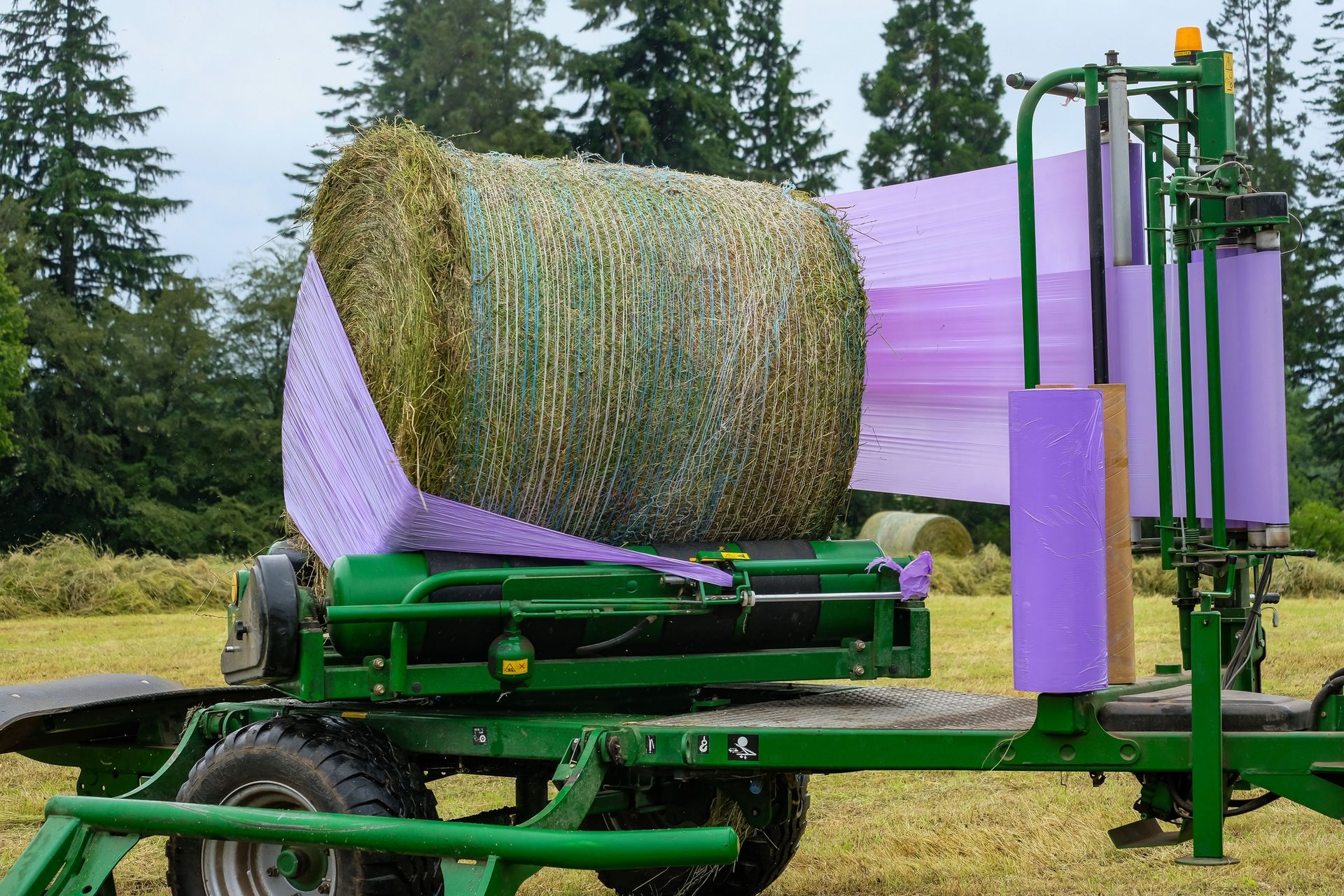
Knowing your bulk net wrap needs before baling season starts can save you time, money, and the stress of running short mid-harvest. Farmers around Pittsburgh, PA, face a baling window that begins with first-cut hay in May and can extend through a third cutting in late September. Getting your numbers right before that first cut means fewer emergency orders and smoother operations from start to finish.
The Simple Formula for Calculating Bales Per Roll
Every roll of net wrap covers a predictable number of bales. The key variables are your bale diameter, how many wraps you apply per bale, and the total roll length.
The formula works like this:
- Multiply your bale diameter (in feet) by 3.14 to get the bale circumference.
- Multiply that circumference by your number of wraps per bale to get net wrap used per bale.
- Divide your total roll length (in feet) by the wrap used per bale. The result is your estimated bales per roll.
For example, a 5-foot diameter bale has a circumference of roughly 15.7 feet. At 2.5 wraps, that bale uses about 39 feet of net wrap. A 7,000-foot roll covers approximately 179 bales at that setting.
Wraps per bale often depend on crop type. Silage bales may need fewer wraps since they are dense and moist. Hay typically needs more wraps to hold shape securely, and straw may need even more. Adjusting this number even slightly changes how far each roll goes.
How Many Rolls Do You Need for Your Whole Season?
Start with your total expected bale count, working through each cutting separately rather than estimating the full year at once.
- Estimate bales per cutting based on your acreage and typical yield.
- Multiply bales per cutting by your number of cuttings.
- Divide your total seasonal bale count by your bales-per-roll figure from above.
- Add a buffer of 10 to 15 percent for roll changes, operator error, and unexpected bale runs.
Pittsburgh, PA, area farms can typically plan for three forage cuttings per season. First cut generally begins in May, second cut often falls in July, and a third cut may be possible in September. Farmers around Allegheny and Washington counties, dealing with rolling terrain and variable spring rainfall, should build a slightly larger buffer, since wet stretches can compress baling windows and push multiple cuts closer together.
Knitted vs. Extruded Net Wrap
Choosing the right type affects how you plan your bulk order. Bulk net wrap is produced two ways: knitted and extruded.
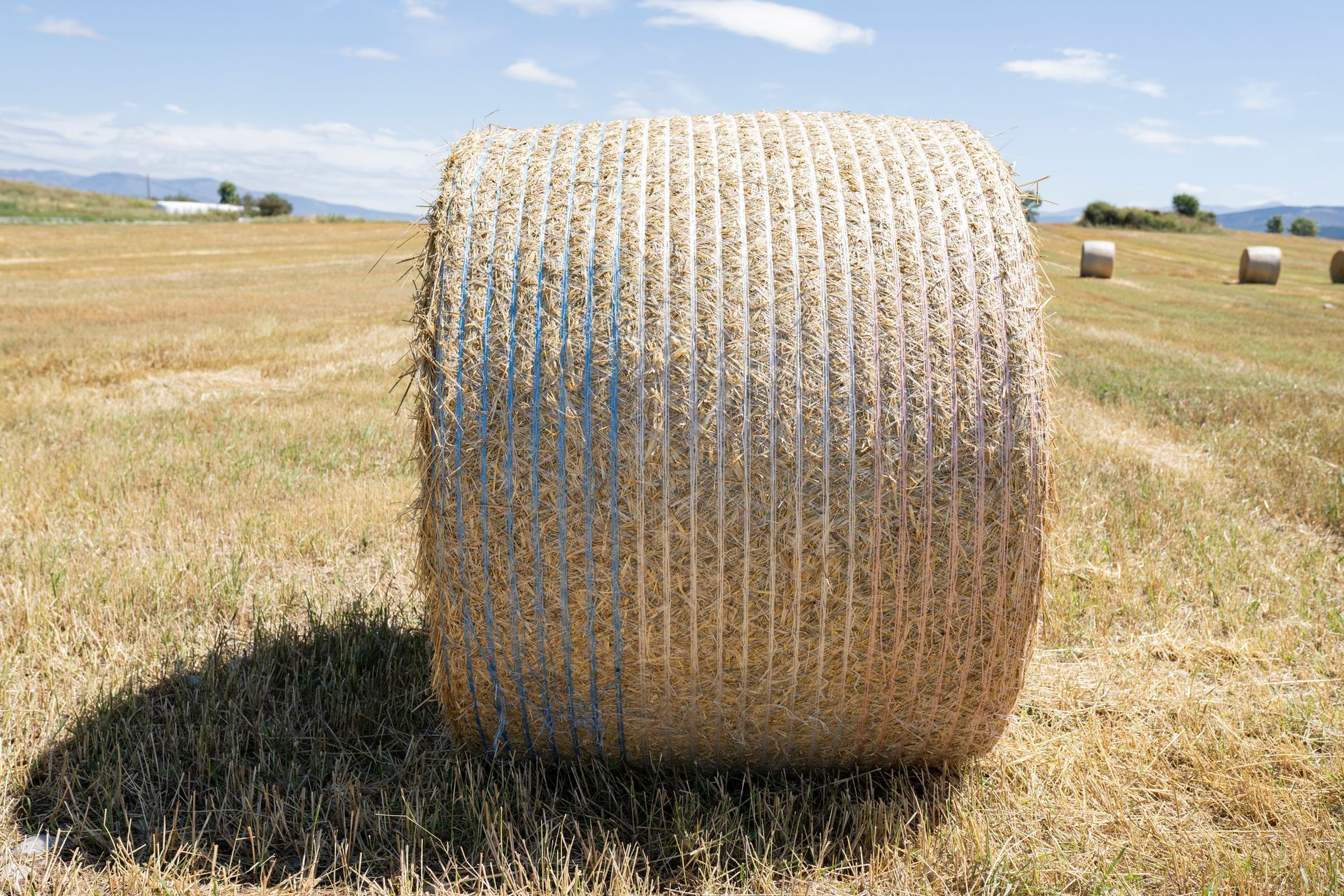
Knitted net wrap is made by knitting extruded tapes together on specialized looms. The structure allows the material to conform more easily to a bale as it exits the chamber, resulting in a tighter, more consistent wrap in variable field conditions.
Extruded net wrap is formed by pushing melted polymer through a die to create the mesh in a single continuous step. Extruded net is recognized for high tensile strength per strand, which can be an advantage when wrapping heavier or denser bales.
Both types work well for hay, silage, and straw. The right choice often comes down to your baler model, the widths your machine accepts, and your crop. Confirm compatibility with your baler manufacturer before placing a bulk order.
What Roll Width Should I Order?
Roll width should match or slightly exceed your baler's pickup width. Common widths include 48-inch, 51-inch, 64-inch, and 67-inch rolls. Using a roll narrower than your bale leaves edges exposed, which can lead to moisture damage and storage loss. Getting width right is just as important as roll length when calculating how much bulk net wrap your operation needs.
How Far in Advance Should I Order?
Ordering four to six weeks ahead of your first cutting is a reliable guideline. For farmers in the Pittsburgh, PA, region, that means targeting late March to early April for pre-season orders before the May first-cut window opens. Bulk net wrap orders can take additional lead time during peak pre-season demand, when suppliers across the mid-Atlantic and Appalachian regions are filling orders simultaneously. Planning early helps you avoid supply delays, lock in quantities, and make sure your baler is ready when the weather cooperates.
Get Ready for Baling Season With Tytan International
Knowing your exact bulk net wrap numbers before the season starts puts you in control of your harvest. Tytan International, serving Pittsburgh, PA, and surrounding areas, supplies wholesale net wrap and agricultural products to independent farmers, ranchers, and agricultural businesses of all sizes. Whether you are planning for one cutting or three, the team can help you match roll specs to your baler and estimate quantities for your operation.
Explore available net wrap options and request a quote for your seasonal supply before the spring rush. Call (913) 492-3222 to speak with a knowledgeable representative. You can also learn more and find directions through Tytan International.